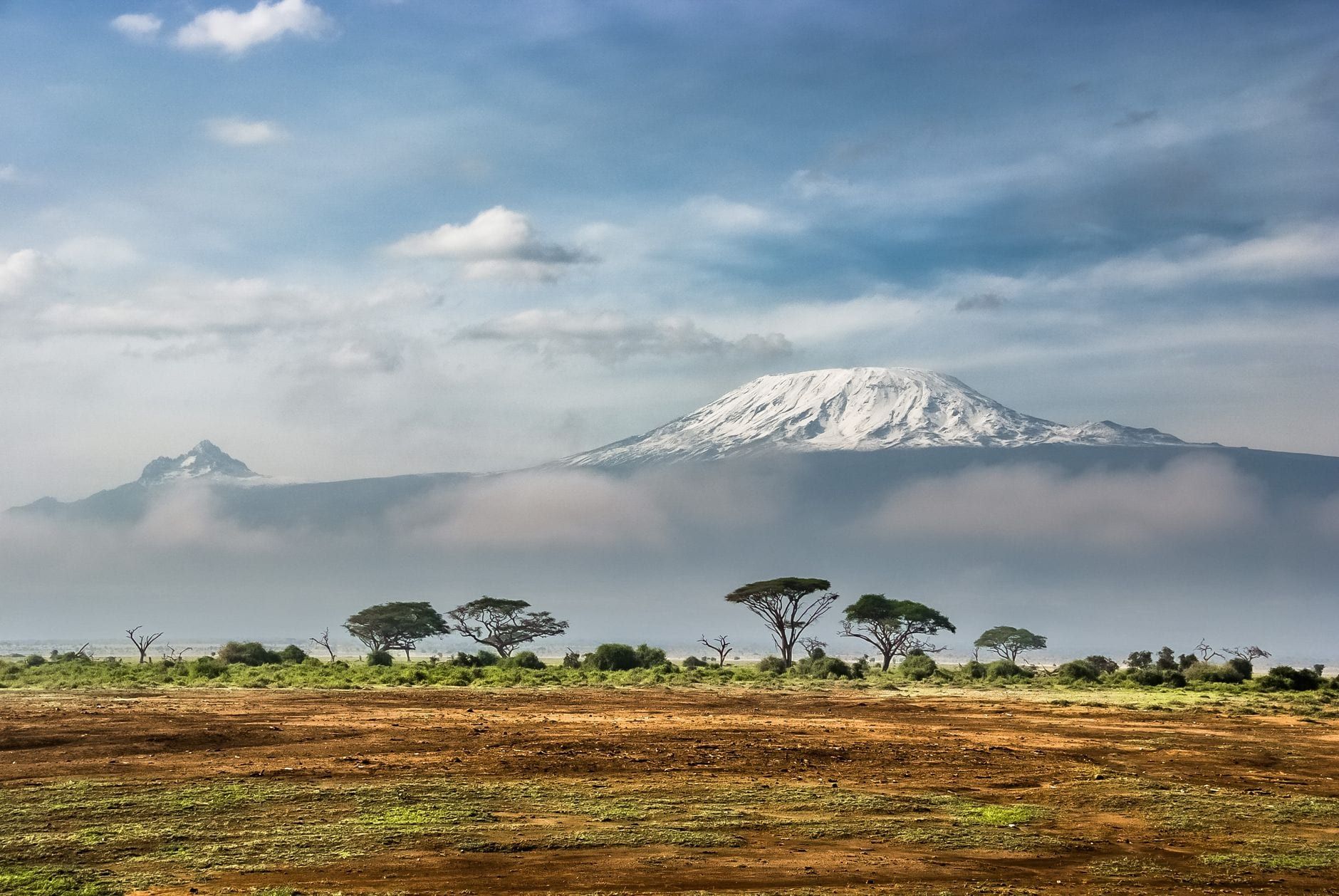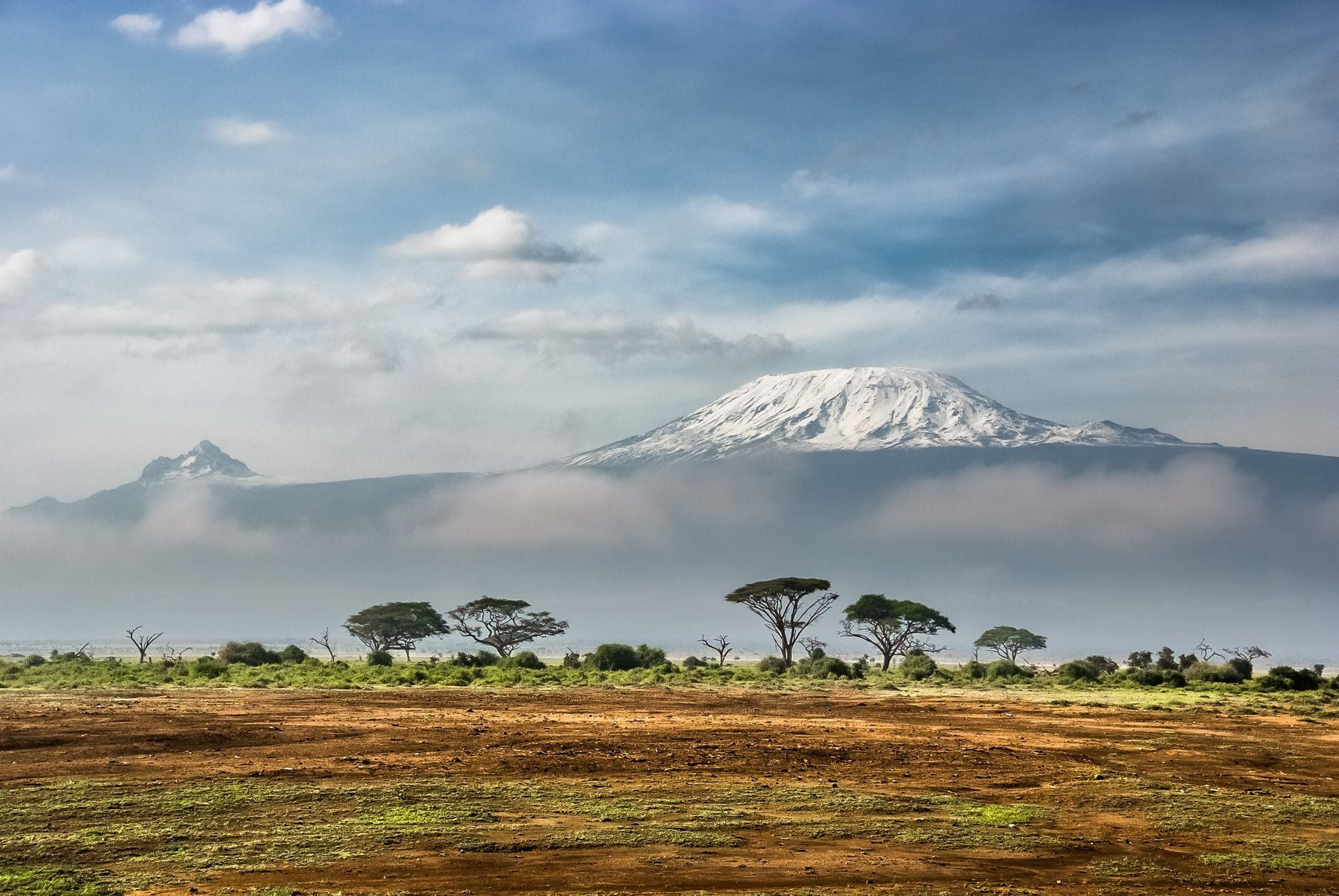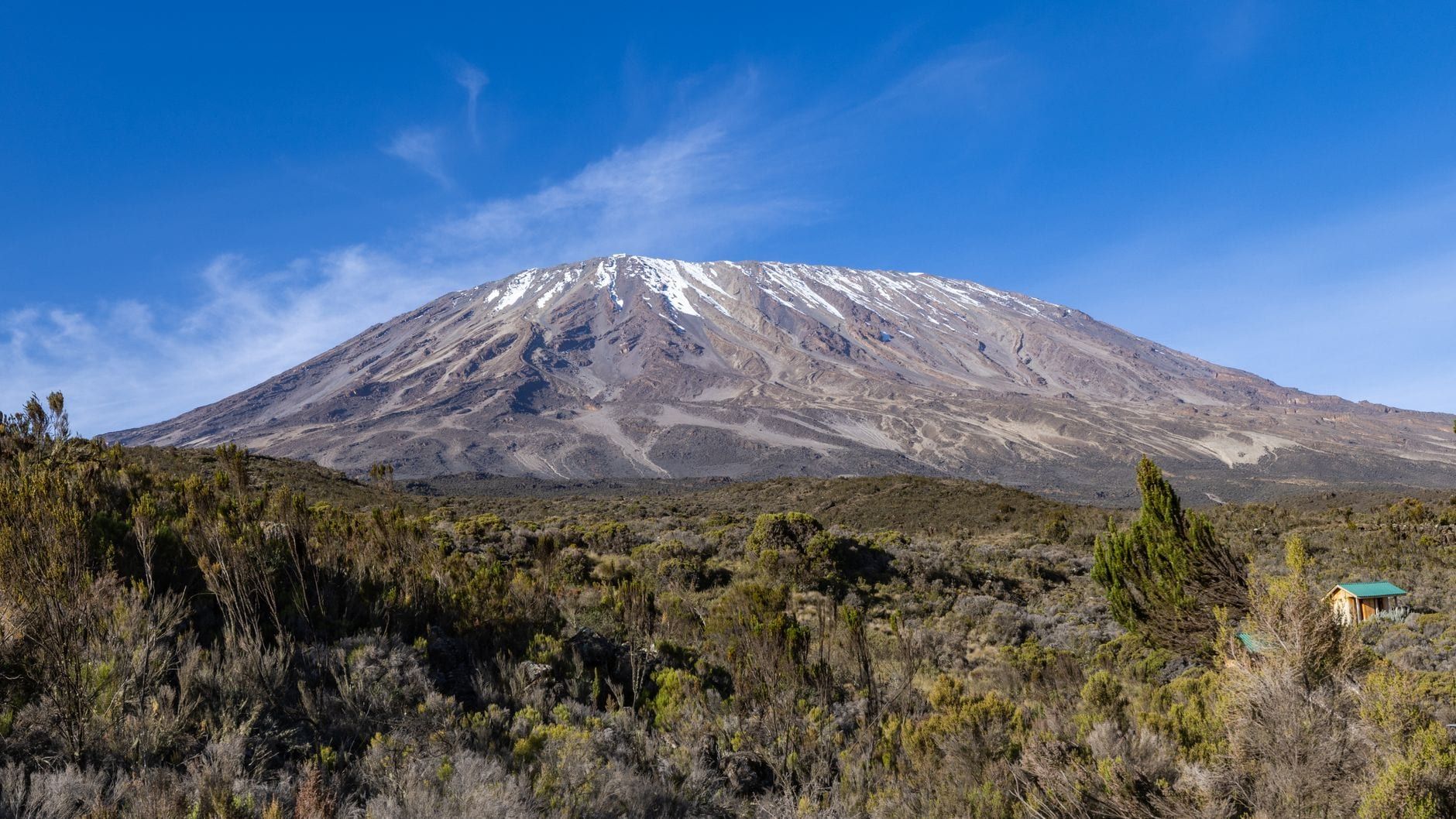
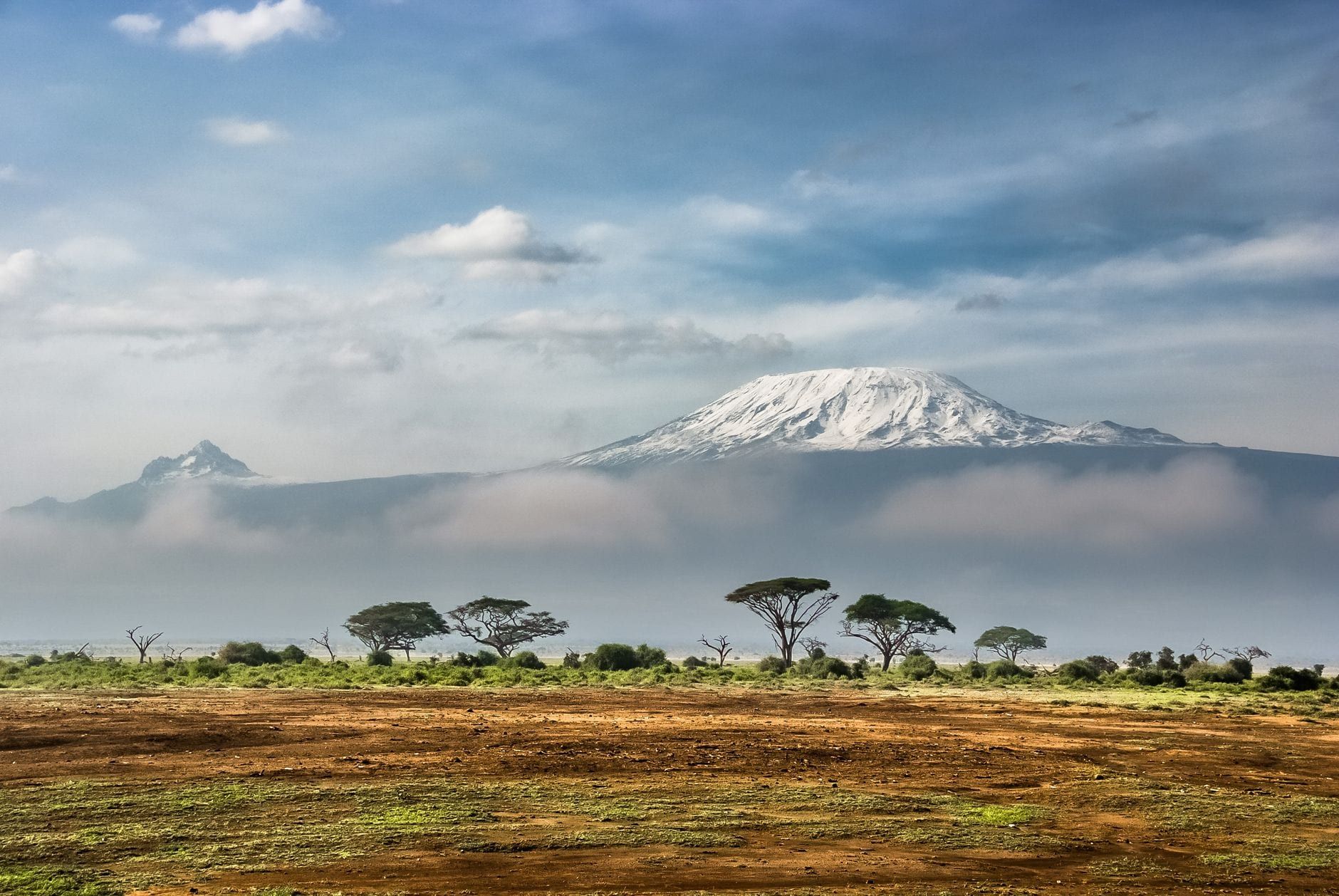
The Rongai route climbs Kilimanjaro from the north, starting near Nale Moru a few kilometres from the Kenyan border and finishing on the Marangu side of the mountain. It's the only path on Kilimanjaro that approaches Kibo from this direction, and that alone makes it one of the quietest ways up.
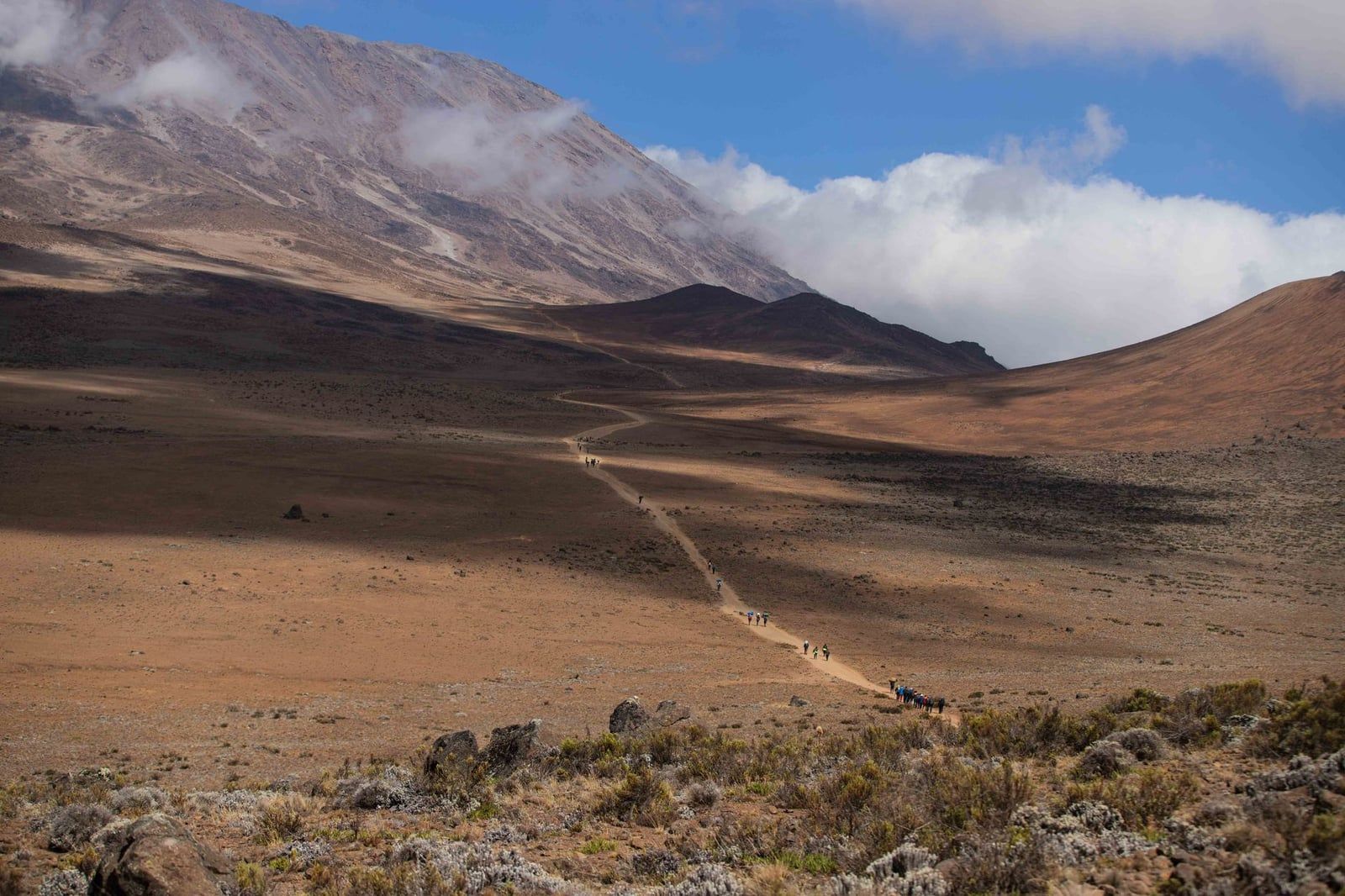
Quiet doesn't mean dramatic. The northern slopes are drier and dustier than the west side, and the scenery is more subdued than on the Lemosho route. What you get in exchange is solitude, decent odds of spotting wildlife, and a route that still works in months when other trails turn to mud. Here's the day-by-day breakdown, how Rongai compares to Kilimanjaro's other routes, and who should book it.
Rongai Route at a Glance
Rongai Gate sits at roughly 1,950-2,100 metres near Nale Moru village, the trailhead for Kilimanjaro's only northern approach. Total distance runs 70-82km depending on the itinerary and who's measuring it — plan on the higher figure for the standard 7-day version. Most operators offer 6, 7 or 8-day itineraries; the 7-day is the one worth booking.
- Distance: 70-82km (43-51 miles) total
- Start: Rongai Gate near Nale Moru, 1,950-2,100m
- Finish: Marangu Gate, descending a completely different route
- Duration: 6, 7 or 8 days, with 7 the recommended standard
- Success rate: 70-85% on 7 days, 50-65% on 6 days
- Difficulty: moderate, gradual gradient, no scrambling
The gradient is gentle and there's no scrambling anywhere on the route, which is why it's often billed as Kilimanjaro's easiest option. That reputation needs a caveat: shorter distance means faster elevation gain, and Rongai doesn't get the strong acclimatization profile that routes like the Machame route build in. Descent always runs down the Marangu side, regardless of which Rongai itinerary you pick, so you walk down through entirely different terrain than you climbed up.
Day-by-Day Rongai Route Itinerary (7 Days)
The 7-day itinerary is Kilimanjaro's standard Rongai plan and the version most guides recommend. Here's what each day looks like.
Day 1: Rongai Gate to Simba Camp
From Rongai Gate (1,950-2,100m), the trail climbs through pine plantation and then rainforest to Simba Camp, also called First Cave, at about 2,600-2,830m. It's roughly 8km and takes 3-4 hours — a gentle opener that lets your body start adjusting before the terrain opens up.
Day 2: Simba Camp to Kikelewa Camp
The forest thins into moorland and heath as the trail climbs past Second Cave toward Kikelewa Camp at around 3,600m. Giant heather and groundsel dot the slope, and Mawenzi's jagged outline starts appearing ahead.
Day 3: Kikelewa Camp to Mawenzi Tarn
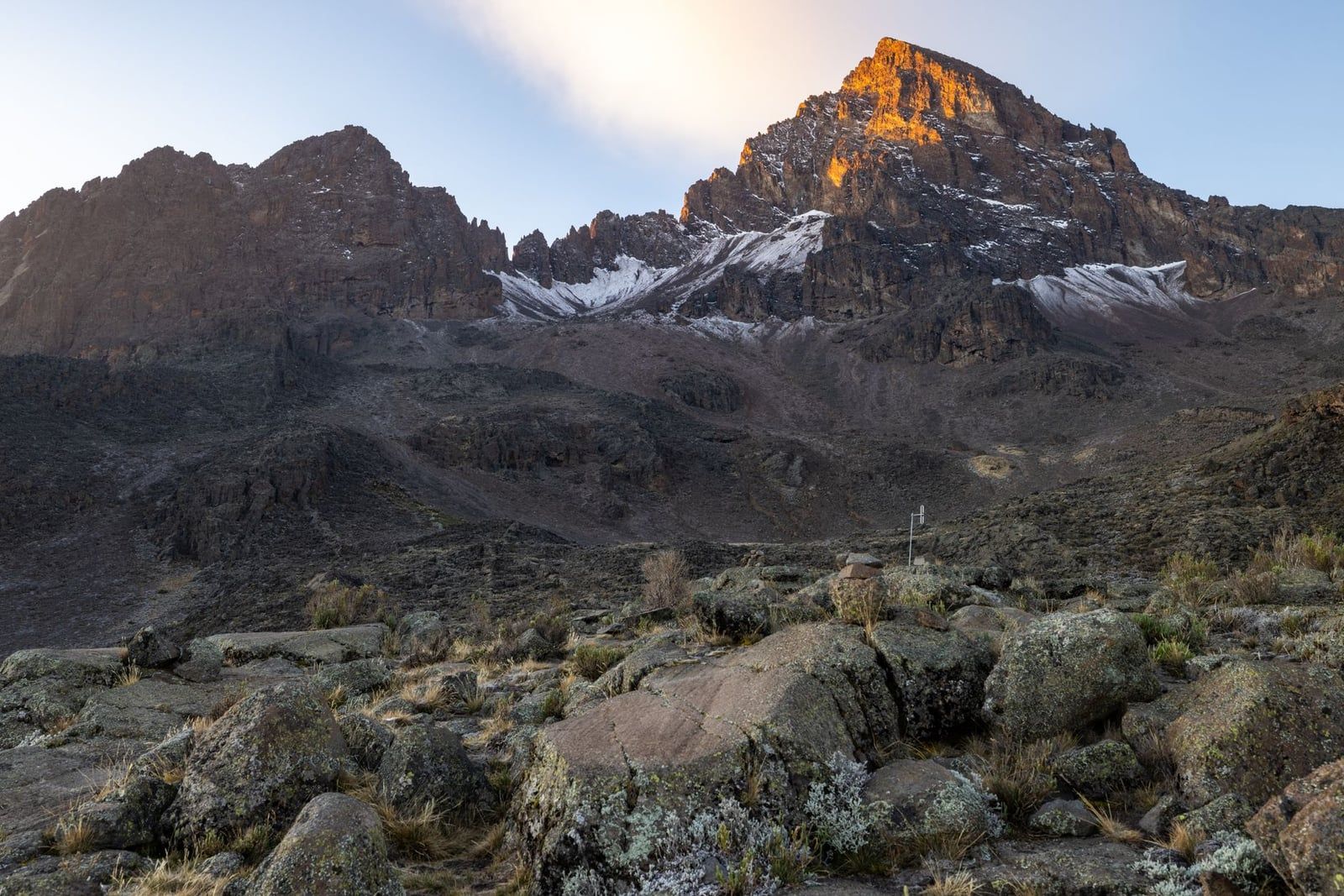
A short, steep climb leads onto alpine desert and Mawenzi Tarn Camp at roughly 4,315m, set almost directly beneath Mawenzi's cliffs. It's one of the more dramatic camps on the mountain, and the low afternoon light on the rock faces is worth reaching camp early for.
Day 4: Acclimatization Day at Mawenzi Tarn
The 7-day itinerary builds in a rest day here — a short walk up toward Mawenzi's lower slopes, then back down to sleep at the same camp. It matters more on Rongai than on routes with a stronger climb-high-sleep-low pattern, since this route gains elevation faster with less built-in adjustment time.
Day 5: Mawenzi Tarn to Kibo Hut
Crossing the Saddle, a wide, exposed alpine desert between Mawenzi and Kibo, leads to Kibo Hut at about 4,700m. There's little shelter from wind up here, and the sparse terrain looks close to lunar.
Day 6: Summit Night — Kibo Hut to Uhuru Peak, then Down to Horombo
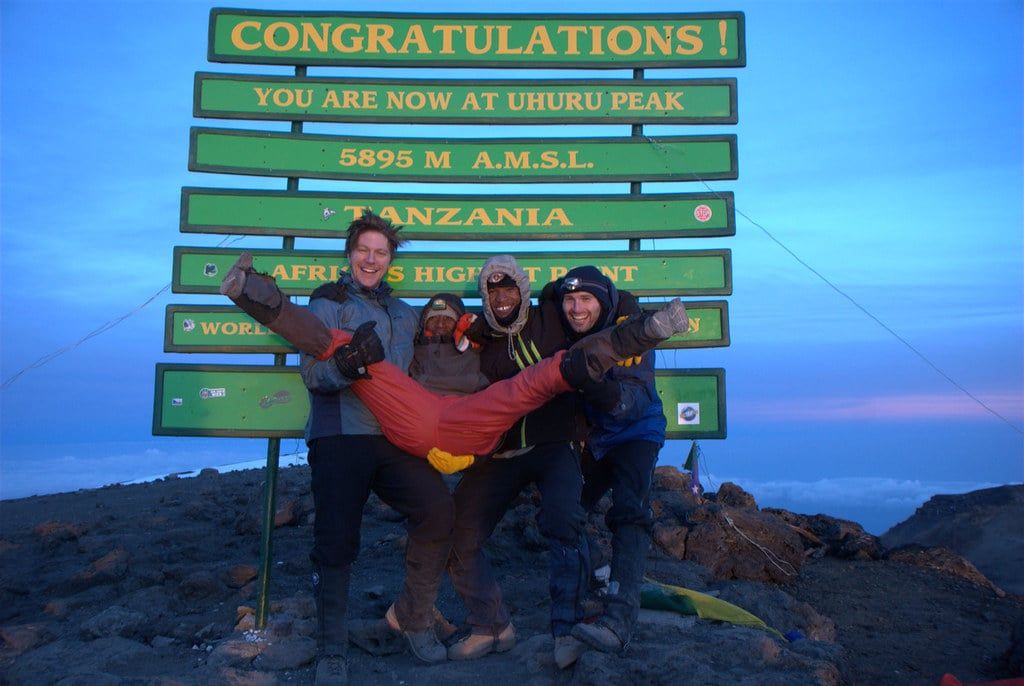
Summit attempts start around midnight, climbing roughly 1,200 vertical metres from Kibo Hut to Gilman's Point (5,681m) on the crater rim, then on to Uhuru Peak (5,895m) — typically 6-9 hours in total. After sunrise at the top, it's a long descent back past Kibo Hut and down to Horombo Hut at around 3,720m, a 12-plus hour day from start to finish.
Day 7: Horombo Hut to Marangu Gate
The final day drops back through moorland into rainforest to Marangu Gate at about 1,850m, where TANAPA rangers issue summit certificates. It's a mostly downhill walk — a good day to enjoy without the pressure of altitude.
Skip the extra day at Mawenzi Tarn and you get the 6-day version, which crams the same distance into less time and drags success rates down accordingly — a budget option, not a smart one. An 8-day 'daytime summit' variation flips the usual midnight push into a daylight ascent, returning to Kibo Hut instead of continuing to Horombo and adding a full rest day; it suits climbers who'd rather avoid summiting in the dark and cold, at the cost of an extra day on the mountain.
Rongai Route vs Other Kilimanjaro Routes
Rongai's biggest edge over Machame, Lemosho and Marangu is solitude — traffic stays light until the route merges with Marangu's descent path at Kibo Hut. Machame and Marangu see far more foot traffic, since both start close to Moshi with short transfer times.
| Route | Crowd Level | Scenery | Difficulty |
|---|---|---|---|
| Rongai | Low | Dry, subdued, close Mawenzi views | Moderate, gradual gradient |
| Machame | High | Varied, Barranco Wall scramble | Moderate to hard |
| Lemosho | Moderate | Most varied, Shira Plateau | Moderate |
| Marangu | High | Rainforest, hut accommodation | Easiest gradient, weakest acclimatization |
Pick Lemosho or Machame if scenic variety matters more than crowd size — both cross the Shira Plateau or the Barranco Wall, features Rongai doesn't have. Pick Rongai if you want to skip the queues at Barranco Camp, don't mind a plainer landscape, or need a route that still works during the shoulder rains. Worth a look too is the Northern Circuit if solitude is the priority and you can spare an extra two or three days.
Scenery, Wildlife and What Makes Rongai Unique
Rongai's reputation as Kilimanjaro's 'boring' route misses what's actually distinctive about it: a drier climate, close-up views of a peak most climbers never see well, and a genuine chance of wildlife most other routes don't offer.
Four Zones and a Rain Shadow
Rongai crosses the same four ecological zones as every other route — rainforest, moorland and heath, alpine desert, and the arctic zone near the summit — but it sits in Kibo's rain shadow. That means drier trails and, on many days, clearer views than the wetter southern and western approaches get.
Mawenzi Peak, Up Close
Mawenzi, Kilimanjaro's jagged second summit, dominates the view for three straight days between Kikelewa and Kibo Hut — no other route gets this close to its cliffs. It's sharper and more eroded than Kibo's smooth dome, and worth a look out of the tent each morning.
Wildlife on the Lower Slopes
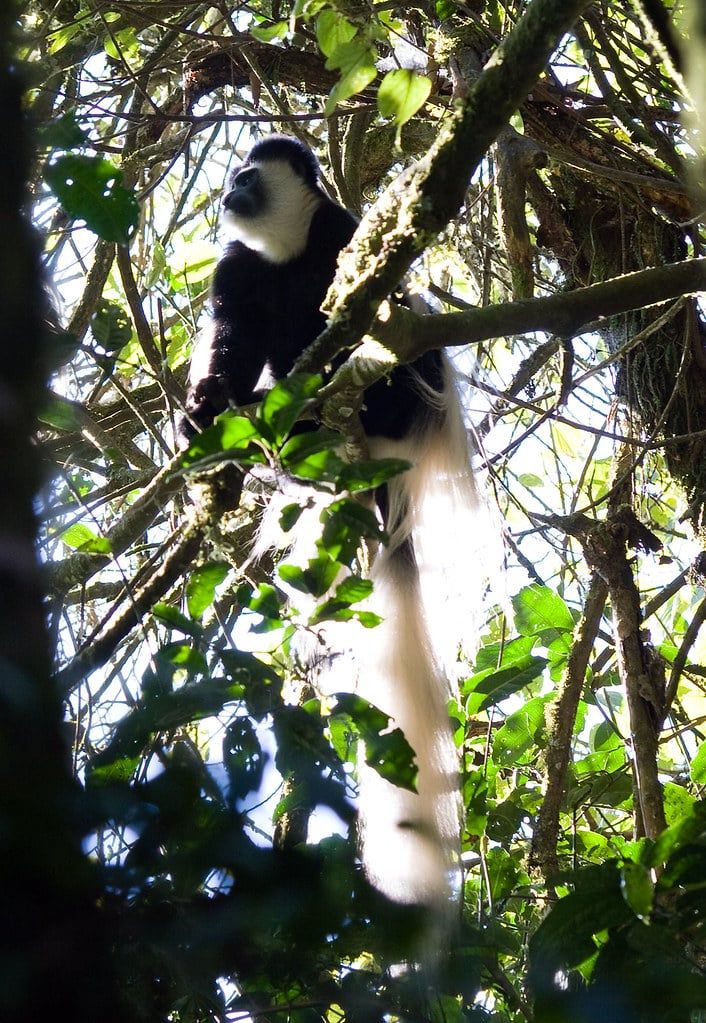
Black-and-white colobus monkeys move through the forest canopy on Day 1, and the lower northern slopes near the Kenyan border occasionally turn up antelope, buffalo or even elephant. Guides on other routes rarely mention wildlife at all — Rongai's low traffic and border-plains setting make it the mountain's best bet for a sighting.
Judged purely on scenery, Rongai loses to Lemosho. Judged on solitude and wildlife odds, it wins outright.
Difficulty, Success Rate and Who Should Choose Rongai
Rongai's gradient is the gentlest on the mountain, with no scrambling anywhere — that's the reason it gets called Kilimanjaro's easiest route. The catch is acclimatization: shorter horizontal distance means faster altitude gain, and Rongai doesn't build in the climb-high-sleep-low pattern that helps bodies adjust on other routes.
Success rates reflect that trade-off. The 7-day itinerary posts roughly 70-85% summit success across operators; drop to the 6-day version and that falls to 50-65%. Good fitness is required, but no prior trekking experience or technical skill.
- Newer to multi-day trekking and want a gentler gradient
- Want quiet trails and better wildlife odds
- Climbing in April, May or November
- Don't need Kilimanjaro's most dramatic scenery
Skip Rongai if you want the shortest drive from Moshi, the lowest sticker price, or postcard scenery at every camp — Lemosho or Machame serve those needs better.
Best Time to Climb the Rongai Route
Kilimanjaro's main dry seasons run January to early March and June to September, and Rongai works well in both. Its real advantage shows up in the shoulder months of April, May and November: sitting in the mountain's northern rain shadow, Rongai often stays passable when Machame, Lemosho and Marangu turn to mud.
Summit night is cold regardless of season — temperatures around Kibo Hut can drop to about -15°C, and it gets colder still on the exposed crater rim near Gilman's Point. Pack for that whatever month you climb, and check the month-by-month breakdown before locking in dates.
Cost of Climbing the Rongai Route
A 7-day Rongai package typically runs $1,700-$3,600+ per person, depending on group size, service level and whether you book a private climb. It usually costs more than Machame or Marangu for the same number of days, mostly because of the long transfer to the remote northern trailhead near the Kenyan border. See the full cost breakdown for how that compares across every route.
Park fees make up a fixed chunk of that price no matter which operator you choose: a $70 per person daily conservation fee, a $50 per person nightly camping fee, and a one-time $20 rescue fee, plus 18% VAT, all paid to TANAPA through your operator. Check current park fees before comparing quotes — a suspiciously cheap package usually means fees or crew wages are being cut somewhere.
Most packages include guides, porters, camping equipment, meals on the mountain and park fees; tips, gear rental and flights into Kilimanjaro International Airport are almost always separate. Ask your operator for a tipping guideline before you go, and budget for it as a real trip cost rather than an afterthought. Browse trekking tours to compare what's bundled into different Rongai packages.
Packing and Preparation Tips for Rongai
Rongai's northern slopes are drier and dustier than the western routes, so gaiters earn their keep here more than almost anywhere else on the mountain. A buff or face mask helps on the exposed Saddle crossing between Mawenzi Tarn and Kibo Hut, where wind kicks up loose grit.
Night temperatures at Kibo Hut can fall to around -15°C, so a four-season sleeping bag rated well below freezing isn't optional. Start training three to four months out: build cardio and leg strength, and get in practice hikes carrying a 5-7kg daypack in the boots you'll summit in. For a full kit list beyond these route-specific extras, see the complete planning guide.
- Gaiters for dust and scree
- Buff or face mask for the Saddle crossing
- Four-season sleeping bag rated below freezing
- Broken-in waterproof hiking boots
- Headlamp with spare batteries for summit night
Frequently asked questions
How many days does the Rongai route take?
Itineraries run 6, 7 or 8 days. The 7-day version is the widely recommended standard, giving proper time to acclimatize before summit night.
Is the Rongai route the easiest way to climb Kilimanjaro?
It's often called one of the easiest thanks to its gradual gradient and lack of technical sections. It lacks the strong climb-high-sleep-low acclimatization pattern found on Machame or Lemosho, though, which offsets the easier walking.
What is the success rate of the Rongai route?
Roughly 70-85% for the 7-day version and 50-65% for the 6-day version across operators. Some individual operators report higher figures, up to 85-95%, for their own itineraries.
How long is the Rongai route in km/miles?
About 70-82km (43-51 miles) total, depending on the exact itinerary and which source is measuring it.
Is Rongai route good for beginners?
Yes. It needs no technical climbing skill and has a gentler slope than most routes, making it a solid pick for less experienced trekkers who still show up in good physical shape.
How does Rongai compare to Machame or Lemosho?
Rongai is quieter, drier and gentler in gradient, but less scenically varied and weaker on acclimatization than Machame or Lemosho. It also tends to cost more because of the longer transfer to its remote trailhead.
Can you see wildlife on the Rongai route?
Yes — many consider it the best route for wildlife. Colobus monkeys are common in the forest zone, with occasional antelope, buffalo or elephant sightings on the lower northern slopes near the Kenyan border.
What is the best time of year to hike the Rongai route?
The main dry seasons, January-February and June-September, are best overall. Rongai is also a strong shoulder-season choice in April, May and November, since its rain-shadow position keeps it drier than other routes during those wetter months.