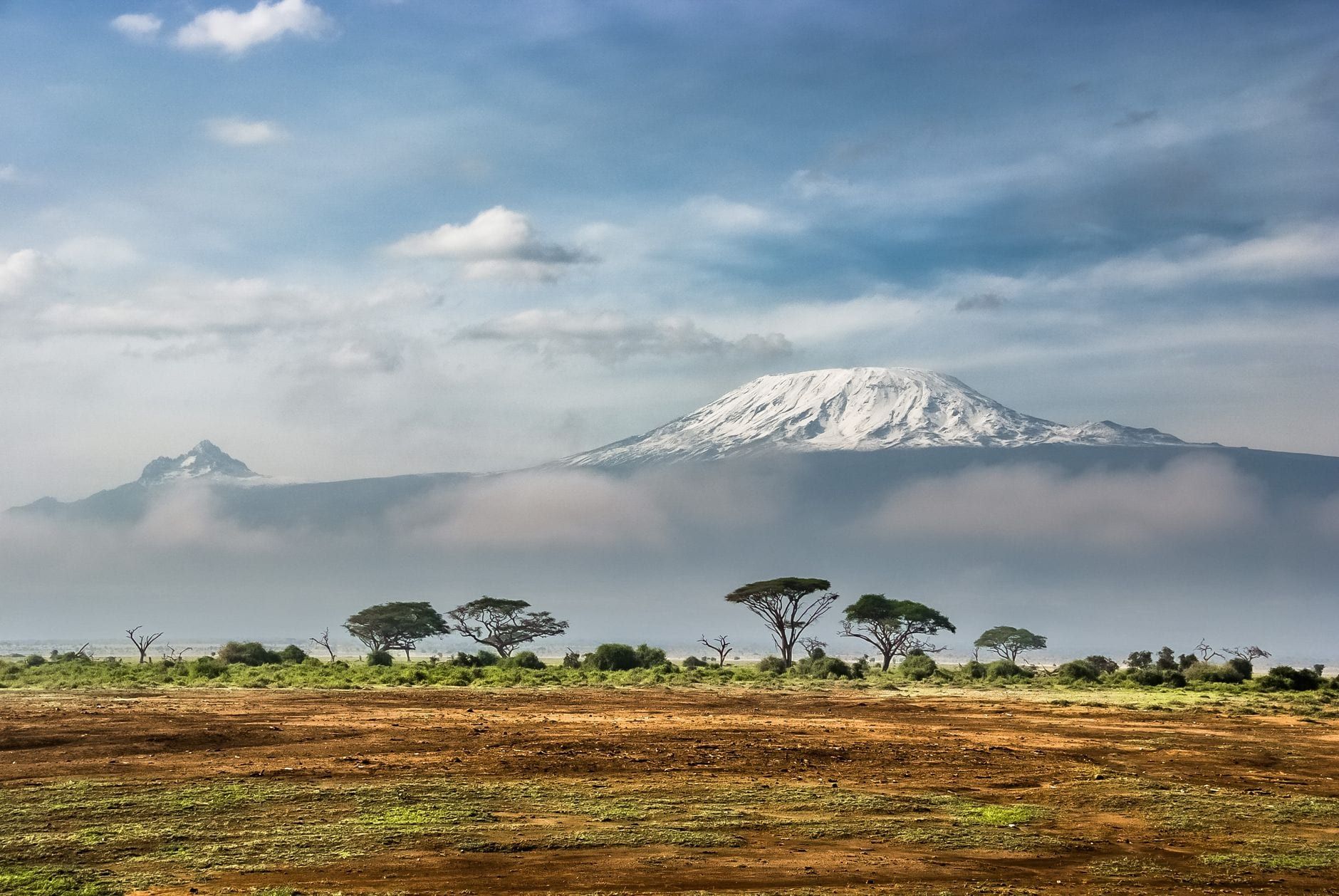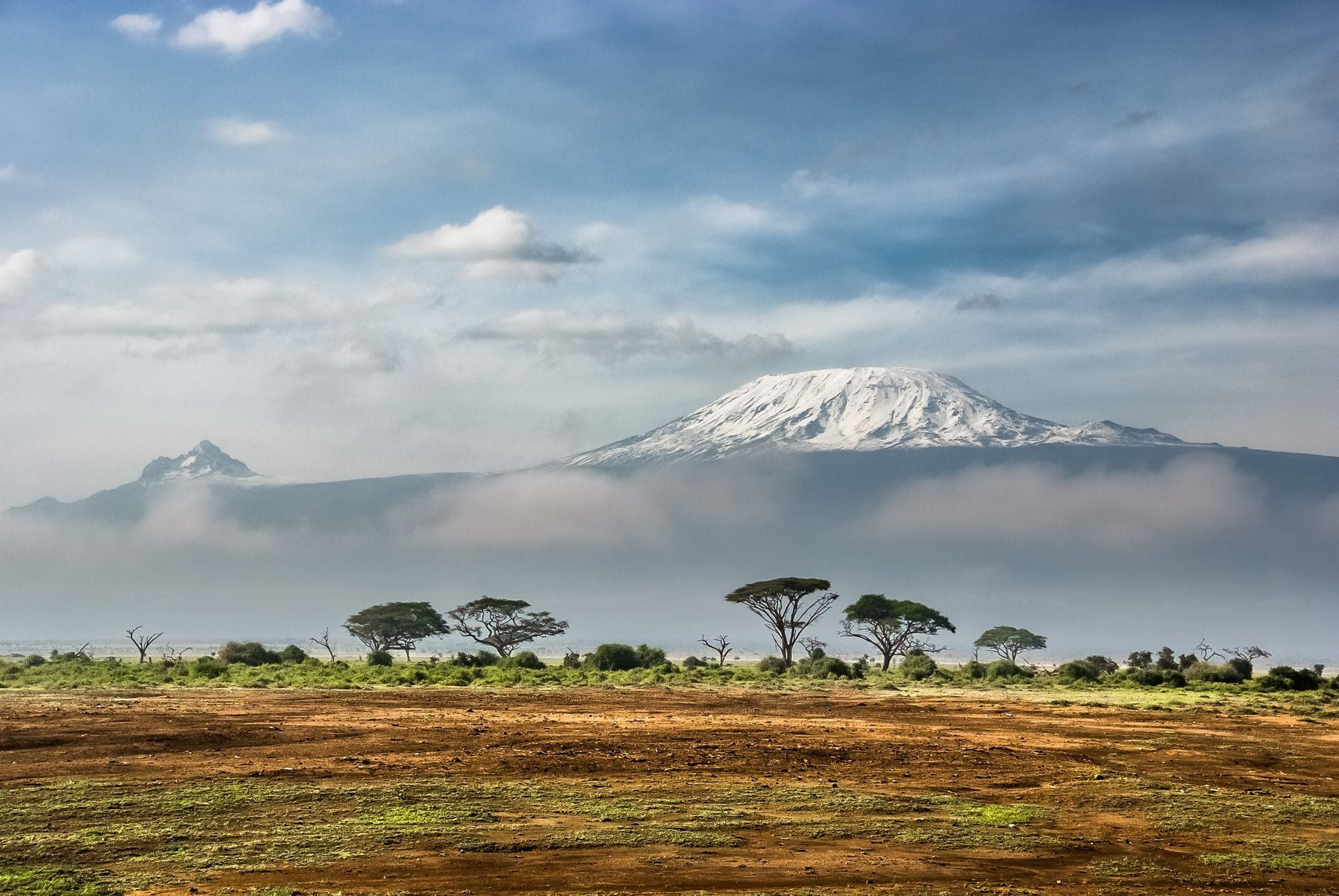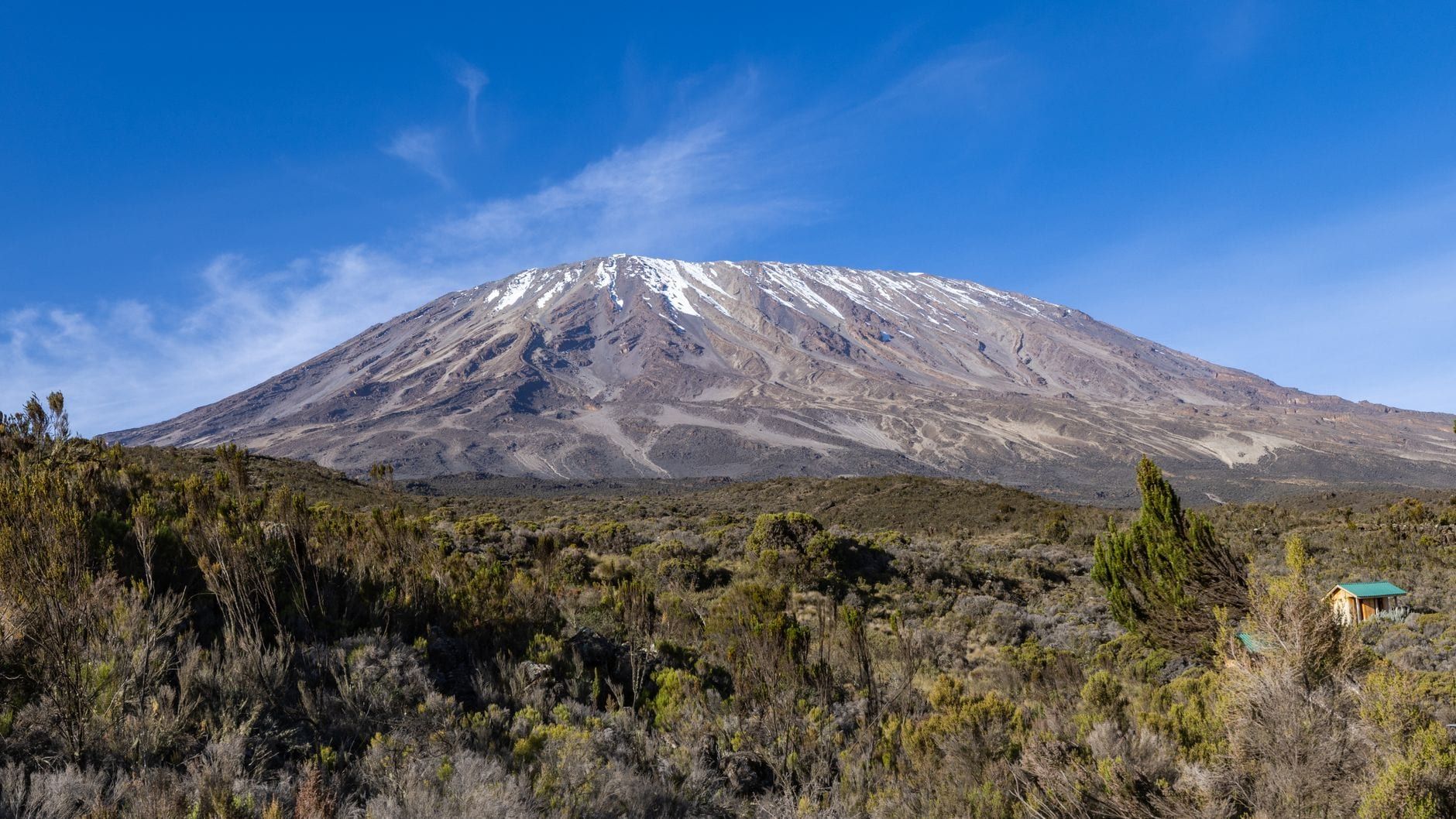
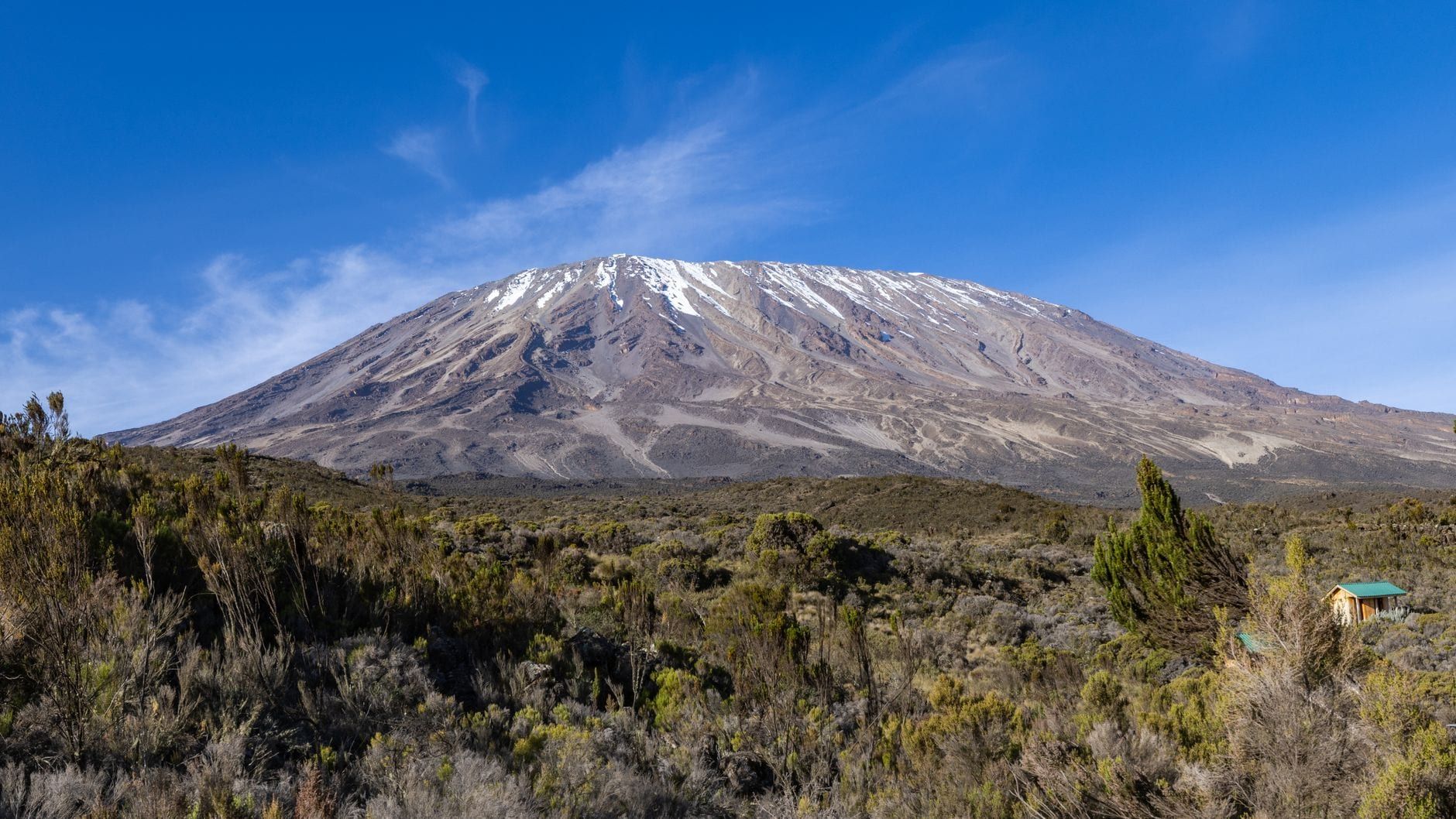
The Barranco Wall is the single most photographed feature on Mount Kilimanjaro's southern routes: a 257-meter rock scramble that looks like a sheer cliff from the valley floor and feels more like a steep, rocky staircase once you're actually on it. No ropes, no harness — just hands, boots, and a line of climbers picking their way up a volcanic ridge that formed when this side of the mountain collapsed roughly 150,000 to 200,000 years ago.
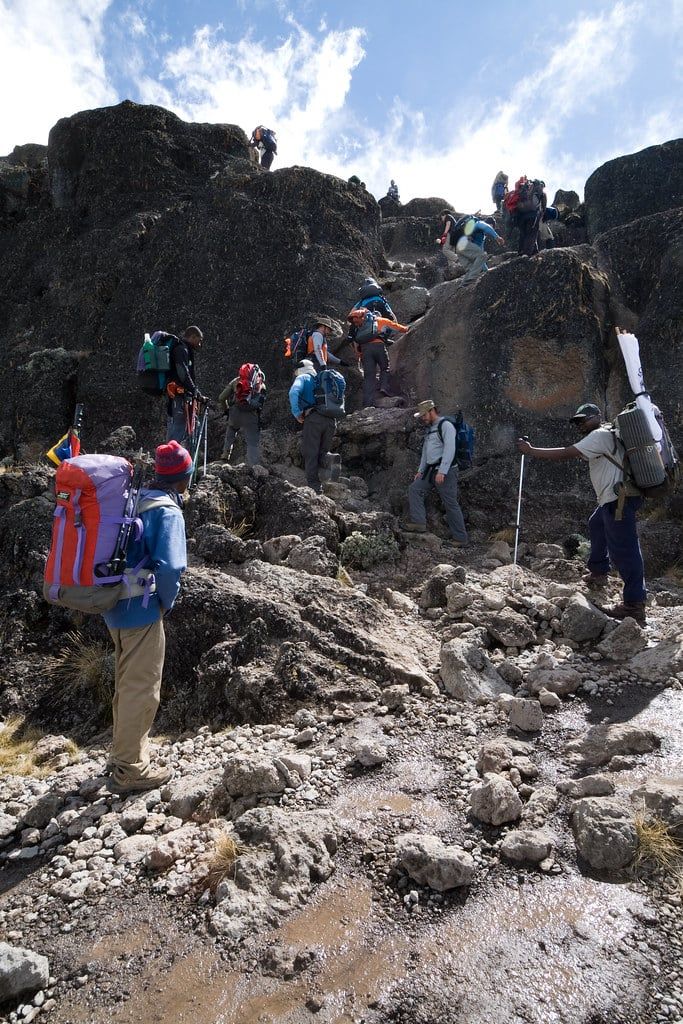
Photos from below make it look like something out of a mountaineering film: packs silhouetted against a near-vertical rock face. Up close, it's mostly a slow walk broken by two short scrambling sections and one narrow, exposed ledge that everyone ends up talking about afterward. Here's what actually happens on the wall, which routes put you on it, and how to get ready if the photos have you worried. For the rest of the logistics, our complete Kilimanjaro planning guide covers everything else you'll need.
What Is the Barranco Wall?
The Barranco Wall is a steep, rocky ridge on the southern flank of Kibo, Kilimanjaro's highest cone — not a sheer cliff, despite how it reads in photos shot from the valley floor. It's a scramble route: a series of rock steps and ledges climbers work up using hands and feet, gaining height fast over a short stretch of trail. The name comes from the Spanish word for a deep ravine or gorge, barranco, a fitting label for the valley it rises straight out of.
Geologists trace the wall's jagged profile to volcanic activity and a landslide that reshaped this flank of the mountain roughly 150,000 to 200,000 years ago, as Kilimanjaro's eruptive phase wound down toward dormancy. What's left is a rampart of hardened lava and ash, weathered into stepped ledges rather than a smooth slope — which is exactly why boots and hands find enough grip to climb it without rope.
Guides call it the Great Barranco Wall for its scale, and the Breakfast Wall because it's the first job of the day, tackled right after breakfast at Barranco Camp while legs are fresh and the rock is dry. Start early and you'll often have the lower sections nearly to yourself before the bulk of the groups arrive behind you.
Where the Barranco Wall Fits on Your Kilimanjaro Climb
Four of Kilimanjaro's seven routes cross the Barranco Wall: the Machame route itinerary, the Lemosho route guide, Shira, and Umbwe. All four approach Kibo from the south and funnel through Barranco Camp, which sits directly beneath the wall, so there's no way around it once you've booked one of these itineraries.
Most climbers reach the wall the morning after a side trip to Lava Tower (4,630m), a rock outcrop climbed and descended on the same day under the 'climb high, sleep low' principle that helps the body adjust to altitude. From Lava Tower the trail drops back down to Barranco Camp for the night, and the wall becomes the first task the next morning. Clear the top and the route eases into a long, undulating traverse toward Karanga Camp, at roughly 3,995m.
| Route | Day the wall is climbed | Note |
|---|---|---|
| Umbwe | Day 2-3 | Steepest, most direct approach to Barranco Camp |
| Machame | Day 3-4 | The most popular route to cross the wall |
| Lemosho | Day 3-4 | Longer western approach, same wall day as Machame |
| Shira | Day 3-4 | Joins the same southern trail before the wall |
Marangu, the Rongai route guide, and the Northern Circuit skip the wall completely because they approach Kibo from its eastern and northern flanks rather than the south. If the photos genuinely put you off, one of those three gets you to Uhuru Peak without ever setting foot on this rock.
Barranco Wall by the Numbers
The wall itself gains 257 meters (843 feet) from base to top — the figure most guides and operators on the mountain use. Elevations around it vary between sources because they're measuring different points: the valley floor at Barranco Camp sits at about 3,976m (13,044ft), and the top of the wall lands around 4,200-4,233m (13,780-13,887ft). One detailed trail survey puts the actual scramble route, switchbacks included, at close to 2km (1.2 miles), graded roughly Class 4 on the Yosemite Decimal System — hands required, rope not.
Budget one to two hours to get up it at a normal pace. Add another hour if you're stuck behind a slow group during peak season, since the trail runs single-file for most of its length. Kilimanjaro sees around 50,000 summit attempts a year, and because Machame and Lemosho are the two most-booked routes on the mountain, a large share of those climbers cross this wall at some point on their trip.
How Hard Is the Barranco Wall, Really?
Nothing about the Barranco Wall requires climbing experience. About 95% of it is careful walking on rock steps and dirt ledges; only two short stretches, one near the bottom and one near the top, demand real hands-and-knees scrambling, and guides talk each climber through the exact footholds as they go. Trekking poles get stowed here — both hands need to be free on the rock, so strap them to your pack before you start.
The Kissing Rock
The one moment everyone mentions afterward is a narrow ledge near the top nicknamed the Kissing Rock, or Hugging Wall, where the trail pinches down to a body-width gap between stone and drop. Climbers flatten themselves against the rock face to shuffle past, and it's become tradition to pose for a photo pressed against it, cheek or lips to the stone. It lasts maybe thirty seconds, and guides station themselves right there to steady anyone who freezes.
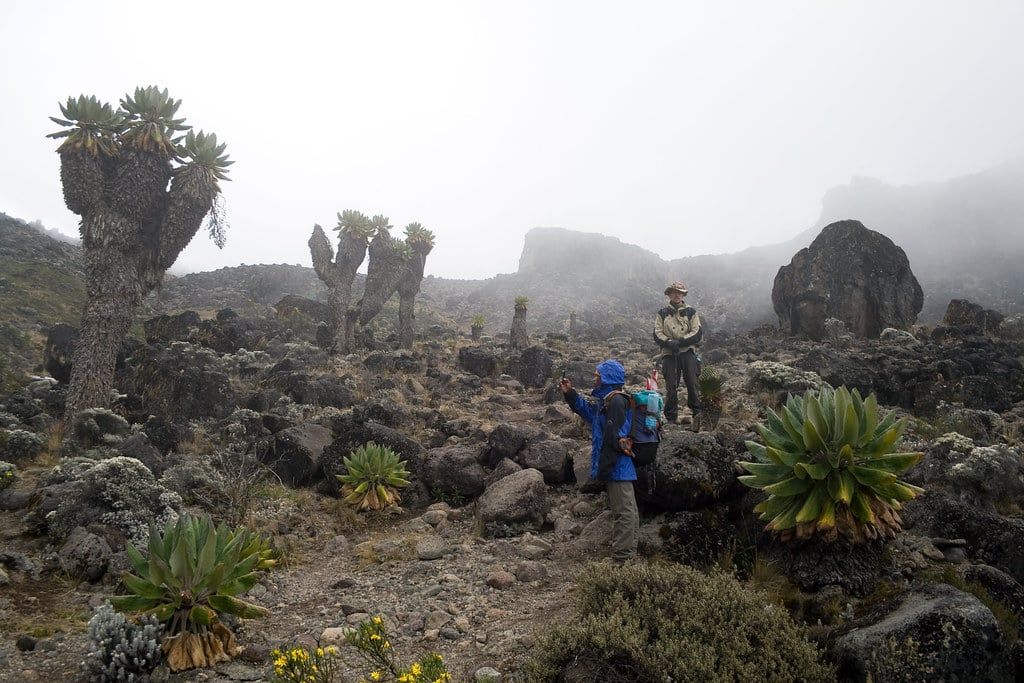
Balance and core stability matter more than raw upper-body strength. If you can manage stairs and a bit of scrambling on uneven rock, you can manage this. A single-file bottleneck forms most mornings in peak season, and it's part of what makes the wall memorable: dozens of climbers from different groups queue and trade jokes at the pinch points, while porters carrying around 20kg loads balanced on their heads jog past everyone on the outside edge, on ground most trekkers wouldn't attempt. Let them through. They're moving faster than you and know exactly where their feet are going. On a clear morning the whole climb comes with a rolling view back over the Barranco Valley and its giant groundsel plants, which is reason enough to look up occasionally instead of just at your feet.
Is the Barranco Wall Dangerous?
No officially documented deaths are attributed specifically to the Barranco Wall. That's worth sitting with, because Kilimanjaro isn't risk-free overall: the mountain sees roughly 5 to 10 climber deaths a year and close to 1,000 mountain rescues, and altitude sickness is the cause behind the overwhelming majority of both — not falls on this stretch of trail.
At no point does the standard route put you over a sheer drop. It's a steep rock slope, not a cliff face, and the exposure that looks so alarming in photos feels far less dramatic underfoot. That said, the Kissing Rock ledge is genuinely narrow, and climbers with real acrophobia can find it unsettling even without any technical danger involved.
If heights are a real problem for you, don't try to grit through it on the busiest section of the mountain. Marangu and Rongai reach the summit from other flanks and never touch this wall at all. For everyone else, the basic safety habits do the real work: move at the guide's pace, keep three points of contact on the rock, and never try to overtake on the narrow sections. That's how people slip — not the terrain itself.
Tips for Conquering the Barranco Wall
A little preparation turns the wall from a source of dread into one of the better mornings on the mountain.
- Pack thin gloves for cold, wet rock, and knee protection if scrambling bothers your joints.
- Train balance and flexibility, not just cardio, in the weeks before you fly out.
- Ask your guide for an early start — leaving Barranco Camp ahead of the main rush cuts queuing time a lot.
- Climb in the dry seasons, late December to March or June to October, for firmer rock and clearer views.
- Let porters pass without hesitation, and use the forced stops at pinch points to actually look at the valley.
Check the month-by-month climbing guide before you pick dates, since weather affects the wall's footing more than its difficulty. Most climbers come off the top grinning rather than shaking. Treat it as a highlight rather than a hurdle, and it usually turns out to be exactly that. Ready to plan the route around it? Browse Kilimanjaro climbing tours that build a rest morning around the Barranco Wall crossing rather than rushing straight through it.
Frequently asked questions
How long does it take to climb the Barranco Wall?
Most climbers take 1-2 hours. It can stretch to 2-3 hours in crowded peak-season conditions or at a slower pace, since the single-file trail forces queuing at the narrow sections.
Do you need climbing gear or experience to climb the Barranco Wall?
No. It's a hands-and-knees scramble, not a technical climb, and requires no rope, harness, or prior experience. Trekking poles get stowed so both hands stay free on the rock.
Which Kilimanjaro routes go over the Barranco Wall?
Machame, Lemosho, Shira, and Umbwe all cross it, typically on day 3-4. Umbwe, the steepest of the four, can reach it as early as day 2-3.
Can I climb Kilimanjaro without doing the Barranco Wall?
Yes. The Marangu, Rongai, and Northern Circuit routes approach Kibo from the eastern and northern flanks and avoid the wall entirely.
Has anyone died on the Barranco Wall?
No officially documented deaths are attributed specifically to the Barranco Wall. Kilimanjaro's roughly 5-10 annual deaths are overwhelmingly linked to altitude sickness, not this section of trail.
What is the Kissing Rock on the Barranco Wall?
It's a narrow, exposed ledge near the top of the wall where climbers press against the rock face to pass safely — many pose kissing or hugging it for photos.
Is the Barranco Wall safe for people afraid of heights?
It's a steep scramble rather than a sheer cliff, and most people manage fine, but the exposure at the Kissing Rock can unsettle genuine acrophobia sufferers, who may prefer the Marangu, Rongai, or Northern Circuit routes instead.
What day of the Kilimanjaro climb is the Barranco Wall?
Usually day 3-4 on Machame, Lemosho, and Shira, and as early as day 2-3 on the steeper Umbwe route.
Kilimanjaro is a UNESCO World Heritage Site, and every climb here runs through a TANAPA-licensed operator with a registered crew. Our Kilimanjaro overview covers the mountain's history and highlights if you're still deciding which route, and which wall day, is right for you.