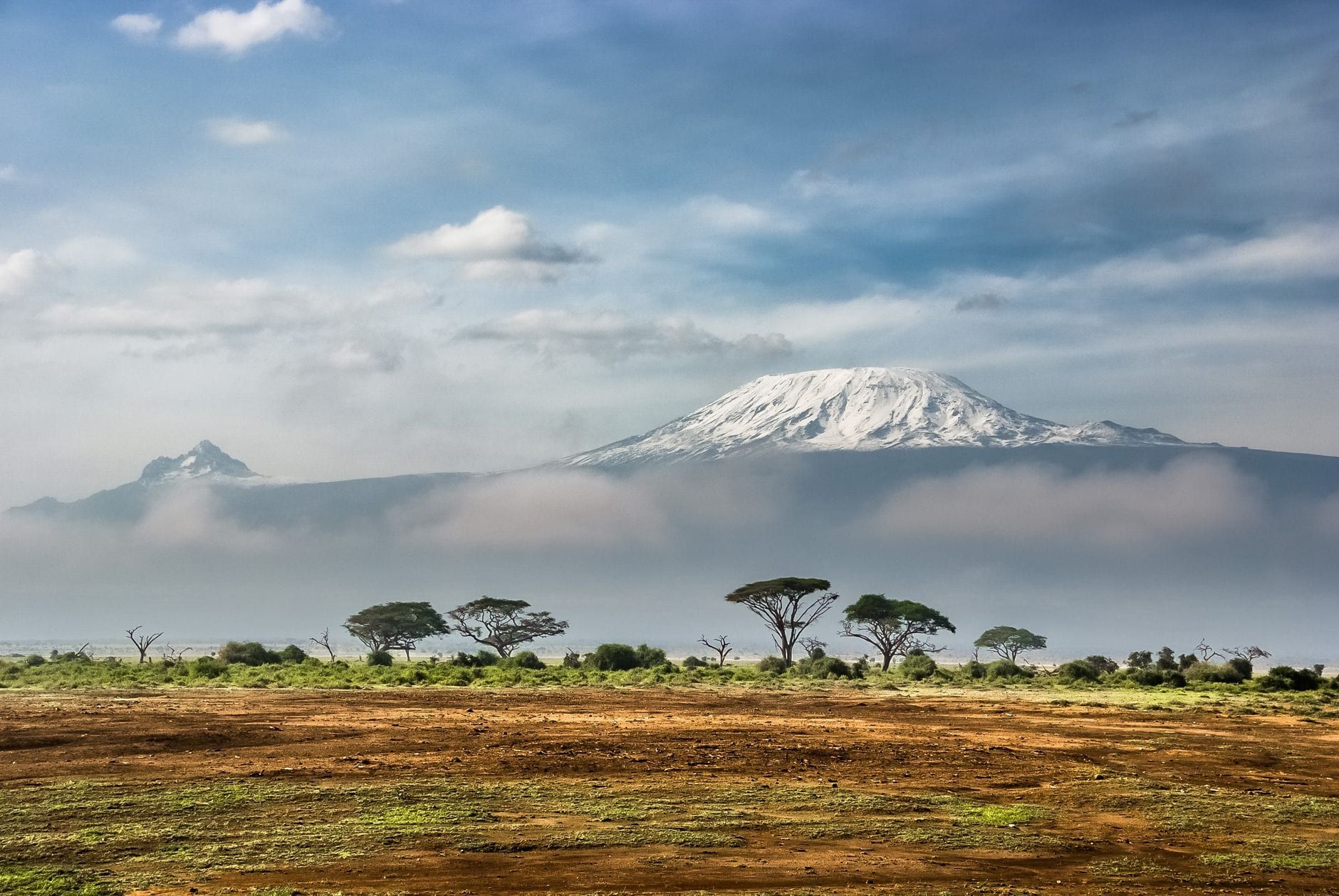
Climb Kilimanjaro and you'll almost certainly spot monkeys crashing through the canopy, hear turacos calling before you ever see one, and probably lose a granola bar to a raven at camp. Elephants and lions technically share the mountain with those monkeys, but seeing one is closer to winning a lottery than following an itinerary.
This guide breaks down what actually lives on Kilimanjaro, zone by zone, so you can calibrate expectations before you book a route. It also covers the question most first-time climbers quietly worry about: whether anything on the mountain can hurt you.
Kilimanjaro Wildlife at a Glance: Is It Like a Safari?
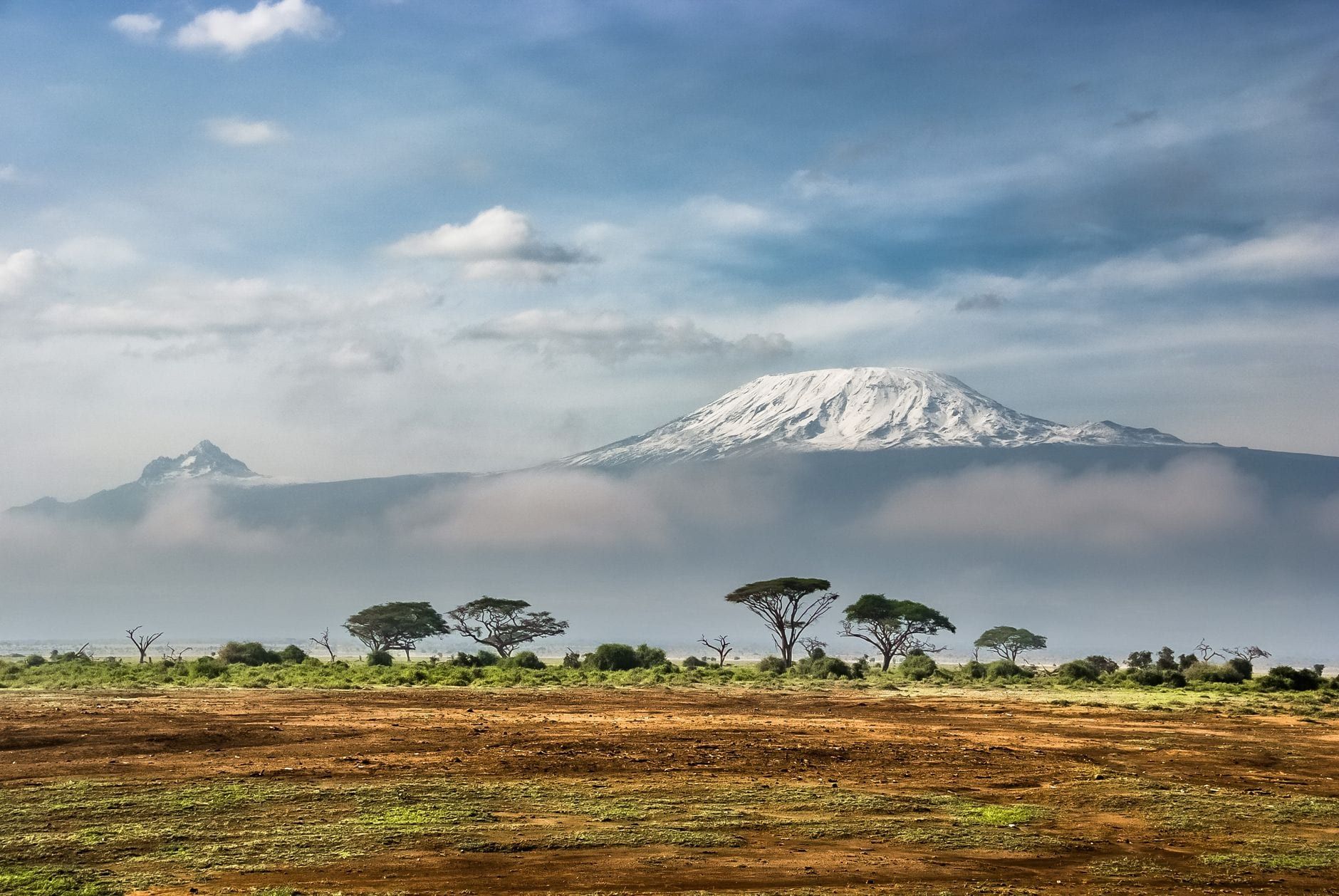
No. Kilimanjaro is a national park and UNESCO World Heritage Site, not a game reserve, and its animals live mostly out of sight. The park covers 1,688 square kilometers, became a forest reserve in 1921, a national park in 1973, and was inscribed by UNESCO in 1987. Surveys have recorded 154 mammal species, including 7 primates, plus roughly 179 bird species spread across its five climate zones.
Numbers like that sound like a safari brochure, but the mountain hides its wildlife well. About 50,000 people trek Kilimanjaro every year, and constant foot traffic pushes animals away from the main trails. Dense rainforest canopy hides even large mammals a few meters from the path, and the routes themselves were cut through the terrain that's easiest to walk, not the terrain richest in game. Go in expecting monkeys, birds and the occasional antelope track — treat an elephant or buffalo sighting as a bonus, not the plan. See our guide to Kilimanjaro's history and highlights for the fuller picture of the mountain's ecology.
Wildlife by Climate Zone: What You'll See at Each Altitude
Kilimanjaro stacks five distinct climate zones between the park gate and the summit, and what you'll see changes fast as you climb. Wildlife thins out with every few hundred meters of elevation, so the first two days of any route matter far more for animal encounters than the summit push itself.
Cultivated and Foothills Zone (800-1,800m)
Farms, banana groves and Chagga villages cover this belt below the park boundary, and most climbers only pass through it by vehicle en route to the gate. Vervet monkeys raid crops here alongside mongoose and small duikers, and elephant corridors run nearby, linking Kilimanjaro's forests to Amboseli across the Kenyan border. You won't spend trekking time in this zone — it ends before most routes even start counting days.
Montane Rainforest Zone (1,800-2,800m)
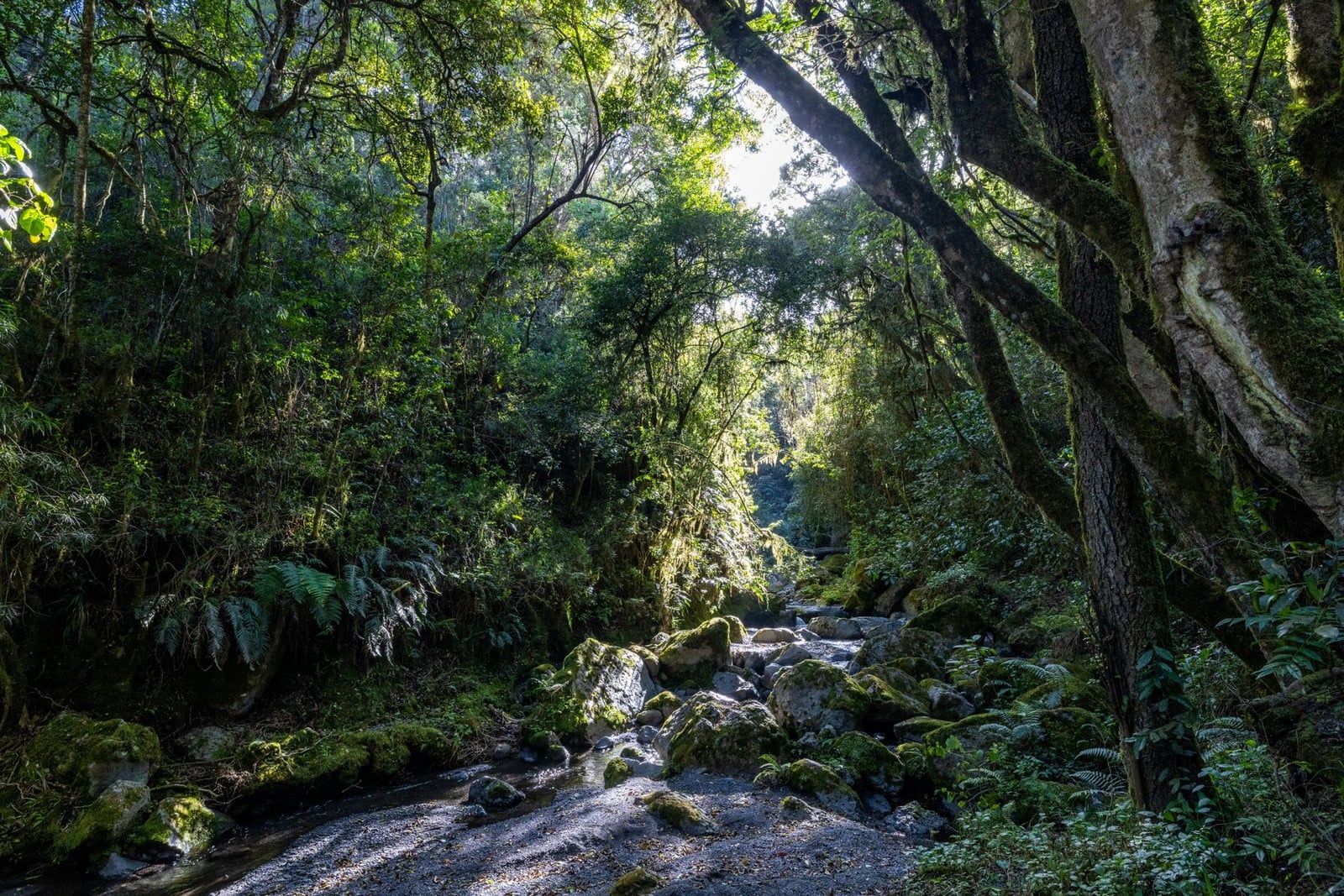
This is the richest wildlife zone on the mountain, and the one worth paying attention to on day one. Blue monkeys and black-and-white colobus monkeys move through the canopy in noisy troops, bushbuck slip through the undergrowth, and bush babies call after dark near camps like Mti Mkubwa or Machame Camp. Elephants pass through occasionally but are genuinely rare; hornbills and turacos are far more reliable, and chameleons turn up on branches beside the trail if you look closely. Keep your eyes up here — the forest's monkey troops are the single most dependable mammal sighting on the whole mountain.
Heath and Moorland Zone (2,800-4,000m)
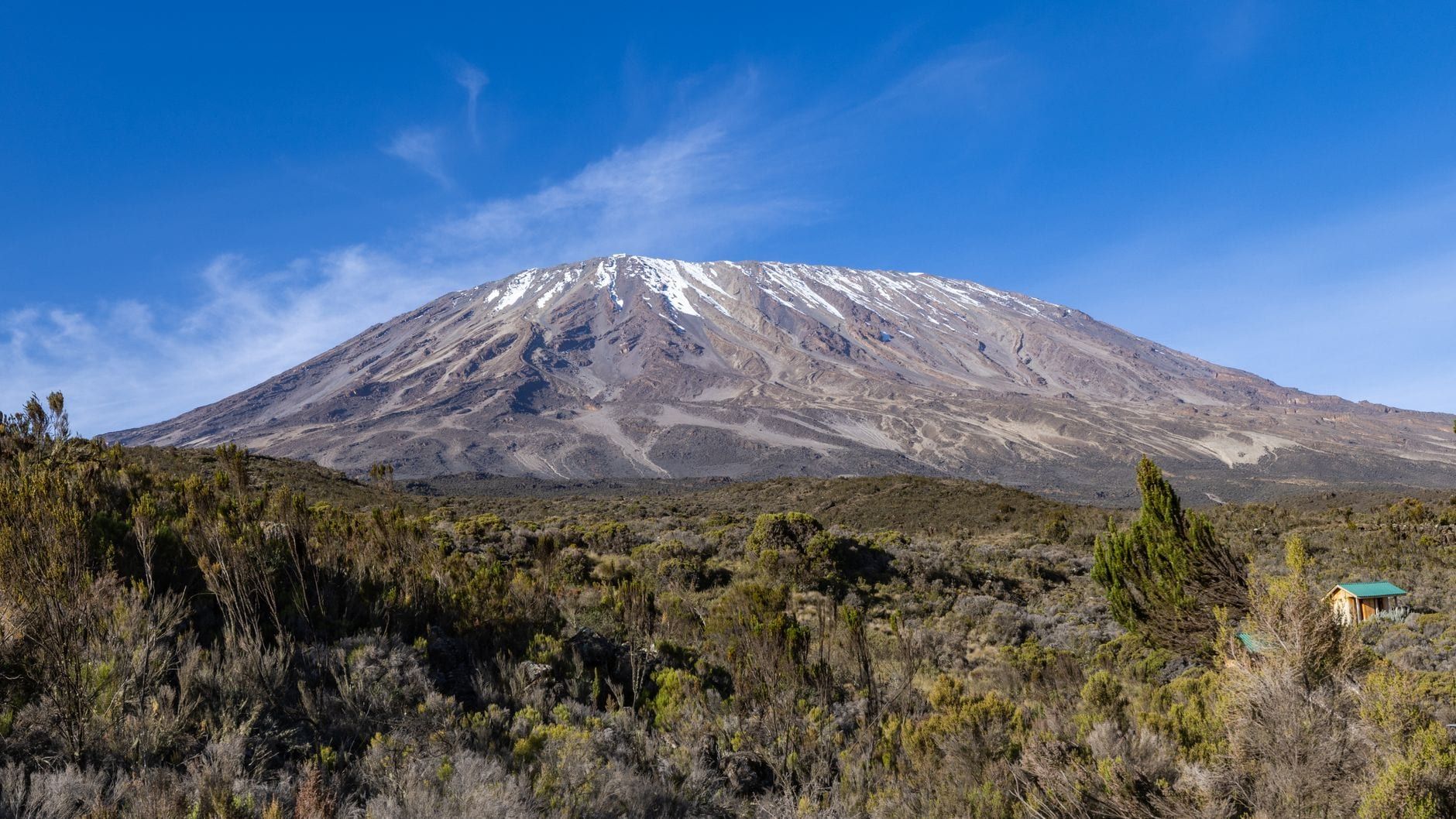
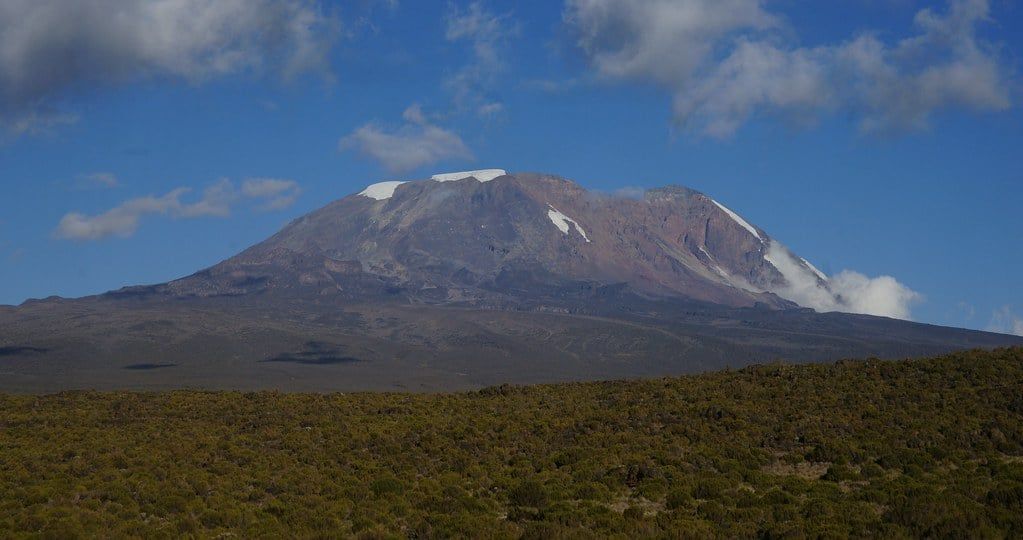
Above the forest, giant heather and groundsel replace the canopy, and animal numbers drop fast. Eland, duikers and klipspringers use this zone, along with serval cats that are almost never seen in daylight. White-necked ravens become the dominant wildlife presence, circling campsites and eyeing any daypack left unzipped.
Alpine Desert Zone (4,000-5,000m)
Vegetation all but disappears here, and so does most wildlife. Four-striped grass mice and a handful of other hardy rodents forage by day and shelter from overnight frost, and an occasional raven still passes overhead. It's a stark, rocky stretch — where survival for any animal is marginal at best.
Arctic Summit Zone (5,000m and above)
Above 5,000 meters, wildlife is essentially absent. The one exception is a small spider species, recorded by entomologist George Salt living up to 5,500 meters on Kibo's slopes, thought to survive on insects blown up by the wind. Don't expect to see it — this is trivia-night material, not a viewing target.
| Zone | Altitude | Signature species |
|---|---|---|
| Cultivated & Foothills | 800-1,800m | Vervet monkeys, mongoose, duikers |
| Montane Rainforest | 1,800-2,800m | Blue & colobus monkeys, bushbuck, bush babies |
| Heath & Moorland | 2,800-4,000m | Eland, klipspringer, white-necked raven |
| Alpine Desert | 4,000-5,000m | Four-striped grass mouse, ravens |
| Arctic Summit | Above 5,000m | Alpine spider (to 5,500m), occasional raven |
Mammals You Might Encounter
Kilimanjaro's mammal list runs to 154 recorded species, but only a handful show up often enough to plan around. Grouping them by how likely you are to actually see one is more useful than an exhaustive catalog.
Common Sightings: Monkeys, Bush Babies and Hyraxes
Blue monkeys and black-and-white colobus monkeys are the mammals you're most likely to actually see, moving through the rainforest canopy in troops during the day. Bush babies (galagos) are nocturnal but give themselves away with sharp calls near forest campsites after dark. Tree hyraxes weigh around 2kg and look like oversized guinea pigs, but they're distantly related to elephants and manatees — their rasping night calls are often mistaken for something far bigger. Four-striped grass mice show up at higher camps too, scavenging near tents once climbers settle in.
The Antelope of the Slopes
Bushbuck and small grey or red duikers live in the rainforest and lower heath, while common eland — weighing up to 940kg and standing about 1.6m at the shoulder — graze the open moorland around the Shira Plateau. Klipspringers max out around 18kg, walk on the tips of their hooves, and pair for life; they're mostly nocturnal, so dawn or dusk near rocky ground gives the best chance of spotting one. Abbot's duiker is the one to watch for and almost never see: an endangered, nocturnal antelope confined to a handful of Tanzanian forest pockets, rarely photographed even by researchers.
Rare and Elusive Mammals
Elephants, Cape buffalo and giraffe occasionally wander onto Kilimanjaro's northern slopes from Kenya's Amboseli ecosystem, most often reported near the Rongai side and the Shira Plateau. Leopards, serval cats, honey badgers, aardvarks, porcupines, bush pigs and civets are all recorded in the park, but sightings by climbers are close to unheard of — most are nocturnal, forest-dwelling and actively avoid the trails. A black rhino was reportedly seen on the mountain's north side decades ago; overhunting wiped the species out here, and none remain today.
Birds of Kilimanjaro
Birds are the most reliable wildlife on Kilimanjaro by far, and with 179 recorded species, there's always something moving through the canopy or circling camp.
Forest Birds
Hartlaub's turaco and the silvery-cheeked hornbill are the two birds most climbers actually notice, both large, loud and easy to spot against the rainforest canopy. Trogons, African pygmy kingfishers and the rare Abbot's starling round out the forest's birdlife, and the park's own Kilimanjaro white-eye lives nowhere else on earth.
Campsite and Moorland Birds
White-necked ravens are the bird every climber meets, and they've learned that daypacks mean food — they're known to unzip pockets left unattended at camp, so keep your bag closed and inside the tent. The malachite sunbird is harder to miss once you spot it: metallic green with scarlet chest patches, feeding on giant lobelia nectar across the moorland. Alpine chats and streaky seedeaters fill out the higher-altitude birdlife.
Raptors and Rarities
Augur buzzards and mountain buzzards patrol the heath and moorland zones, and lammergeiers (bearded vultures) occasionally soar past at altitude, riding thermals along the crater rim. The African pitta, a genuine rarity, has been recorded in the lower forest and draws dedicated birders on its own.
Reptiles, Chameleons and Are There Dangerous Animals?
The safety question comes up on almost every planning call, and the short answer is reassuring: dangerous encounters are rare, and chameleons are the reptile you're actually likely to meet.
Chameleons
Jackson's chameleon is the one everyone hopes to see: males grow three curved horns, and they cling to branches in the lower forest zone, changing color far more slowly than the myths suggest. The smaller Dwarf Fischer's chameleon, with two horns, is native only to northern Tanzania and southern Kenya and shares the same lower-altitude habitat.
Snakes: How Worried Should You Be?
Kilimanjaro is home to more than 100 recorded snake species, but only about 5 are venomous: the green mamba, boomslang, puff adder, brown forest cobra and eastern vine snake. All of them stick to the low-altitude forest zone, and guides are trained to spot and avoid them long before you would. Snake bites on climbers are rare enough that most operators never see one in a season — stay on the trail and the odds of crossing paths with anything venomous are low.
Big Predators: Lions and Leopards
Lions are occasionally reported on the Shira Plateau, and leopards range through the forest zone, but climber sightings of either are effectively unheard of. Trails sit above and around the elevation bands where these predators hunt, and constant trekking traffic keeps them well clear. Don't approach any animal you do encounter, and let your guide handle anything unexpected — that's exactly what they're trained for.
Best Routes and Timing for Wildlife Sightings
Route choice changes your wildlife odds more than anything else you control, and timing sharpens whatever the route gives you.
Northern Circuit and Rongai: Best Wildlife Odds
The Northern Circuit and the Rongai Route cross Kilimanjaro's quieter northern slope, close to the wildlife corridor linking the mountain to Kenya's Amboseli ecosystem. That's where reports of elephant, buffalo and eland activity cluster, and lower foot traffic on both routes means animals haven't been pushed as far from the trail. If wildlife matters alongside the summit, these two give the best shot.
Lemosho and Machame: Strong Rainforest Encounters
Both the Lemosho Route and the Machame Route climb through several kilometers of untouched rainforest on day one, exactly where blue monkeys, colobus troops and forest birds are most active. Neither matches the Northern Circuit for larger mammals, but for classic canopy wildlife they're excellent.
Marangu and Shira: Least Wildlife
Marangu retraces the same path up and down, meaning heavier daily traffic and less habitat variety overall. Shira starts on the plateau above the rainforest, skipping the most wildlife-rich zone on the mountain entirely. Pick either for other reasons — Marangu's huts, Shira's shorter forest walk — but not for animals.
Timing matters almost as much as the route. Dry season months — June to October and January to early March — thin out vegetation and clear the trails, making animals easier to spot than during the rains. Our month-by-month climbing guide covers conditions in more detail; for wildlife specifically, aim for the same dry windows that also give the best summit odds.
Want Guaranteed Wildlife? Pair Your Climb With a Safari
Kilimanjaro doesn't have the grassland or prey density to support the Big Five as a group, so lion, leopard, elephant and buffalo sightings on the mountain stay occasional at best, and rhino are gone entirely. If seeing all five matters more than the climb itself, plan a safari extension rather than hoping the mountain delivers.
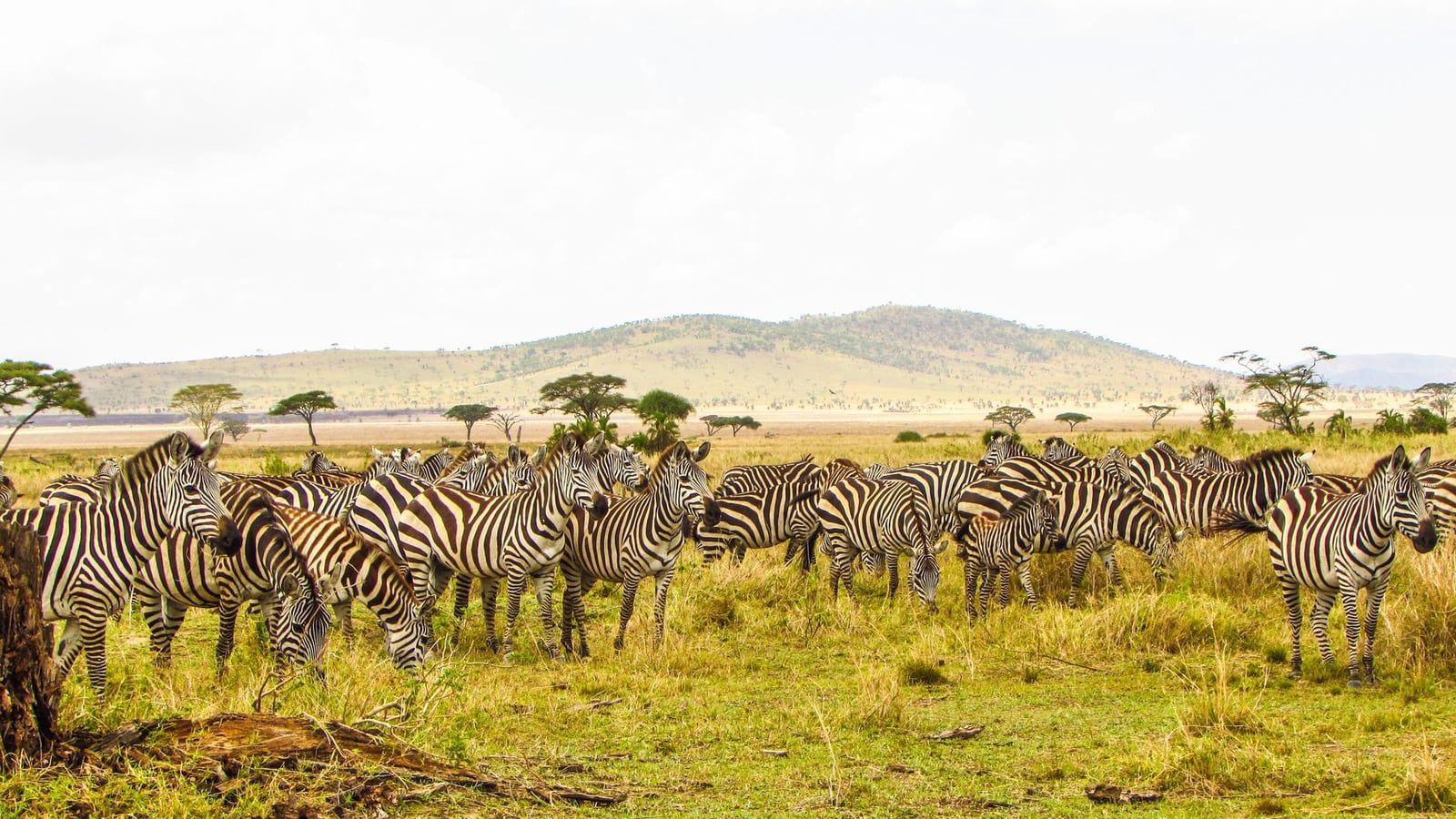
The Serengeti, Ngorongoro Crater, Tarangire and Lake Manyara all sit within a few hours of Moshi and Arusha and deliver reliable Big Five sightings from a vehicle. The usual pattern is to climb first and safari after — your legs get a rest while you watch game from a Land Cruiser instead of hiking to see it. Browse our Kilimanjaro and safari combinations for itineraries that pair the two.
Frequently asked questions
What animals will I see while climbing Kilimanjaro?
Mostly blue monkeys, black-and-white colobus monkeys, bush babies, tree hyraxes, chameleons and plenty of birdlife in the rainforest zone. Large mammals like elephant and buffalo are rare and confined mainly to the lower and northern slopes.
Are there dangerous animals on Kilimanjaro?
Lions and leopards technically live in the national park but are almost never encountered by climbers because trails sit above their usual range. Of over 100 snake species recorded, only about 5 are venomous, and encounters are rare.
Will I see elephants on Kilimanjaro?
Elephants occasionally move into the montane forest from Kenya's Amboseli and Tsavo ecosystems, most often reported near the Rongai route and the northern slopes, but sightings during a climb remain rare.
Which Kilimanjaro route has the best wildlife viewing?
The Northern Circuit and Rongai Route are best, thanks to their quieter northern-slope position near Amboseli's wildlife corridor. Lemosho and Machame are strong for rainforest species; Marangu and Shira are the weakest.
Can I see the Big Five on Kilimanjaro?
No — the mountain lacks the grassland and prey density to support them. Pair a climb with a Serengeti, Ngorongoro Crater, Tarangire or Lake Manyara safari for Big Five sightings.
What is the best time of year to see wildlife on Kilimanjaro?
The dry seasons, June to October and January to early March, offer thinner vegetation and clearer trails, making animals easier to spot than during the rainy months.
Are there snakes on Mount Kilimanjaro?
Yes, over 100 species have been recorded, but only about 5 are venomous: the green mamba, boomslang, puff adder, brown forest cobra and eastern vine snake. All stay in the low-altitude forest zone, and encounters are rare.
Do any animals live near the summit of Kilimanjaro?
Almost none. Above 4,000m only hardy rodents, occasional white-necked ravens and a rare high-altitude spider recorded up to 5,500m have been documented. The arctic summit zone is essentially without wildlife.